Key Factors for Successful Renewable Energy Projects
The worldwide transition towards sustainable infrastructure has improved renewable electricity from a speculative company social obligation initiative into a central driving force of long-term capital protection. For corporations, developers, and institutional traders, executing a simple strength asset deployment requires navigating a complicated matrix of regulatory compliance, economic engineering, and localized physical constraints. Success does not depend totally on deciding on high-performance hardware; it hinges on an undertaking’s structural alignment with nearby grid dynamics, targeted tax incentive optimization, and robust hazard-mitigation protocols. Failing to account for those systemic variables can critically degrade asset yields, postpone grid interconnection, and transform a projected revenue generator right into a stranded legal liability.
Navigating Financial Modeling and Solar Installation Services in Maryland
The preliminary phase of any possible renewable deployment needs an exhaustive monetary feasibility analysis that transcends basic premature capital prices. Modern commercial and software-scale strength tasks rely closely on leveraging localized coverage frameworks, off-taker agreements, and tax monetization techniques to attain an appropriate internal rate of return. In areas experiencing competitive legislative decarbonization mandates, builders ought to structurally align their capital stacks with particular country-level incentives, solar renewable energy certificates, and clean power grants.
When reading business opportunities through set-up organizations presenting specialized Solar Installation Services in Virginia Beach, venture managers need to systematically calculate the levelized fee of energy against shifting local utility price lists. A successful implementation relies on a multi-tiered corporate economic method, which generally includes:
- Tax Equity Structuring: Maximizing the 30% Federal Investment Tax Credit alongside the Modified Accelerated Cost Recovery System to unexpectedly recoup preliminary capital layouts within the initial financial years.
- Power Purchase Agreements: Establishing long-term contractual agreements with creditworthy off-takers to assure surprisingly predictable, multi-decadal cash flows that satisfy institutional lending necessities.
- Debt Optimization through C-PACE: Utilizing Commercial Property Assessed Clean Energy applications to steady 100% prematurely, long-term financing tied immediately to the property tax assessment, maintaining core company operating capital.
Overcoming Grid Integration Constraints with Solar Installation Services in Chesapeake
Engineering an excessive-yield smooth power asset calls for a deep understanding of localized grid capacity, substation proximity, and regional environmental elements. Microclimates and coastal topographies introduce awesome operational dangers that have to be addressed at some point in the preliminary engineering layout phase. Partnering with an experienced Solar Installation Services in Chesapeake ensures that commercial arrays are constructed to withstand excessive wind zones, corrosive saltwater environments, and localized transmission bottlenecks that frequently impact coastal and maritime infrastructure.
Grid interconnection remains one of the most essential hurdles for project completion. Developers ought to conduct rigorous engineering studies to assess present-day website hosting capacity and avoid prohibitive software upgrade costs. Integrating advanced battery power storage systems into the design provides an essential mechanism to hedge against curtailment risks, permitting asset operators to save extra strength generated for the duration of high manufacturing hours and discharge it strategically when regional spot charges boost.
See also: The Future of Agricultural Technology
Technical Insight: Mitigating Grid Congestion and Curtailment
An intermittent electricity era can weigh down localized distribution networks. Incorporating smart, software-interactive inverters and on-site online energy storage lets venture operators actively manage voltage fluctuations. This twin-layer approach guarantees full compliance with software grid codes while isolating the industrial asset from localized grid downtime.
| Asset Classification | Primary Technology Stack | Financial & Policy Integration | Core Operational Objective |
| Industrial Logistics Hub | 750 kW Ballasted Roof Solar Array | Federal ITC + MACRS Accelerated Depreciation | Eliminates 75% of peak daytime operational cooling overhead. |
| Coastal Maritime Facility | Marine-Grade PV + 200 kW Battery Bank | Coastal Resilience Grants + Net Energy Metering | Ensures continuous operations during regional grid drops. |
| Agricultural Enterprise | Ground-Mount Tracking PV Infrastructure | USDA REAP Grant Financing + Ongoing SREC Monetization | Converts underutilized acreage into a recurring revenue stream. |
| Multi-Family Housing Complex | Sleek Roof-Integrated PV Arrays | Virtual Net Metering + State Clean Energy Credits | Lowers common-area utility costs; drives asset valuation. |
Enhancing Asset Lifecycle Yields through a Residential Solar Panel Installer in Maryland
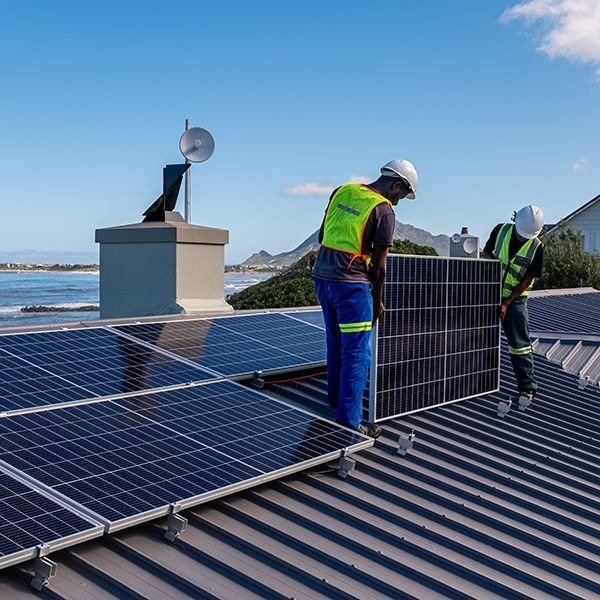
While software-scale and business projects dominate corporate power discussions, scaling decentralized micro-generation requires equal precision on the community and residential stages. For large-scale real estate developers and network microgrid operators, a Residential Solar Panel Installer Virginia is essential to make certain seamless integration into present property portfolios. This localized execution method calls for precision engineering to optimize roof space, control shading profiles via advanced LiDAR modeling, and enforce scalable electrical infrastructure.
Long-term asset viability depends totally on rigorous operations and upkeep protocols. Implementing computerized, sensor-driven monitoring systems permits asset managers to measure real-time performance, identify anomalies, and deploy focused upkeep earlier than minor component degradation impacts overall system yield. This proactive control model preserves the asset fee, guarantees the most manufacturing efficiency, and guarantees a dependable return on investment over a 25- to 30-yr operational lifecycle.
Final Thoughts on Executing Successful Renewable Energy Projects
The business case for deploying renewable power infrastructure has developed beyond easy environmental compliance. Today, it represents an excessively yielding, defensive capital allocation strategy that insulates agencies from unstable global commodity markets. Achieving a successful venture’s final results calls for breaking down the conventional silos between financial structuring, engineering precision, and proactive regulatory navigation.
By systematically addressing grid interconnection boundaries, taking advantage of federal and state tax incentives, and enforcing sturdy, climate-resilient engineering designs, developers can unlock particularly predictable operational benefits. Whether deploying a massive floor-hooked-up tracking array or dealing with decentralized network microgrids, the middle principles remain identical: thorough risk mitigation throughout the pre-production phase guarantees remarkable financial and operational performance over the asset’s lifecycle.
Frequently Asked Questions (FAQs)
Q: What is the primary cause of delays in utility-scale renewable energy initiatives?
A: The maximum commonplace bottleneck is the application interconnection queue. Developers often come across unexpected grid congestion and tremendous grid-upgrade costs that were not recognized at some point during preliminary website exams. Conducting early interconnection feasibility research is important to trap those troubles before making huge capital investments.
Q: How do Solar Renewable Energy Credits (SRECs) affect the overall monetary modeling of a project?
A: SRECs act as an excessive-margin, performance-based incentive. For each megawatt-hour of easy strength generated, the asset operator earns one credit that can be sold at the open marketplace to utilities seeking to satisfy state mandates. This creates
Q: Why is on-site online battery storage becoming vital for new business solar deployments?
A: Battery garage protects initiatives from height-demand application fees and curtailment. It allows commercial operations to practice “peak shaving”—using saved solar energy while grid strength is most pricey—and affords critical backup energy, ensuring operational continuity at some stage in grid outages.