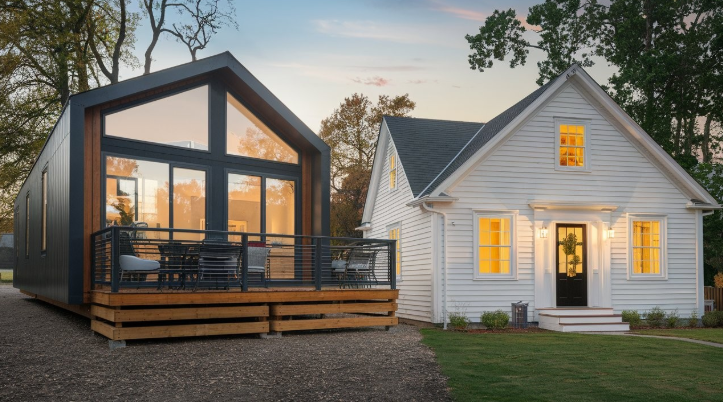
Cube Prefab House vs. Traditional Homes: Which Is Better?
People approach homeownership differently nowadays, as lifestyles are changing and it’s about flexibility, efficiency, and affordability. Cube prefab house are among the most discussed trends in housing, characterized by their compact shape and modular design. The traditional home still offers plenty of room, comfort, and value over the long haul. If you’re contemplating choosing a cube prefab house or a regular house, knowing the differences would greatly help you make an informed decision. Choose the best material for your next project, no matter what you might need. Some popular building materials include:
What is a Cube prefabricated house?
A cube prefab house is a kind of prefabricated house that is built in sections in a factory and delivered to the site for assembly. These homes are box-type, which means they exhibit the qualities of simplicity and efficiency. Cube prefab homes are high in demand.
- Minimalist design
- Rapid setup
- Efficient designs.
- Environmentally conscious craftsmanship.
They’re often occupied full-time or seasonally as permanent residences, vacation houses, or ADU Homes.
What is a traditional home?
Traditional houses are built on-site by conventional means. The size, style, and layout of these homes can vary widely, making use of more choices regarding architecture and material. They are often linked to the following features:
- Expansive living areas.
- Solid bases.
- Tailor-made designs
- Construction processes are set up.
Standard homes are the most commonly found home type. They usually take longer to build than other types.
How to Choose the Right Option between Traditional and ADU Homes?
If you are confused between the two homes, there are some things to consider:
Building Duration and Procedure
The construction timeline is one of the biggest differences between cube prefab houses and traditional houses. Cube prefab house are produced in a regulated atmosphere that allows for a quicker estimation of production completion dates and can lessen the effects of labor and weather delays. Once the modules are ready, they can be assembled at the site in days or weeks.
On the contrary, traditional homes are built on-site. Depending on the complexity of the design and other factors such as the permit and weather, this can take many months and possibly over a year.
If the speed and efficiency of construction matter to you, Cube prefab houses clearly have the edge.
Price and Affordability
Often, a homeowner’s likely deciding factor is cost. Cube prefab houses are generally less expensive due to their efficient manufacturing and lower labor costs. Such activities also waste less material, which saves costs even more. The expenses associated with traditional homes are:
- Manpower-based construction.
- Extensive project timeframes.
- Increased material usage.
Long-term appreciation of traditional homes could be better based on location and market conditions.
Cube prefab homes are generally more affordable than traditional homes but may not be the best long-term investment.
Construction and Design
Both options offer benefits when looking at design. Cube prefab or ADU homes concentrate on modern, efficient layouts. Although customization is offered, it is limited to a set of modules. That allows for faster production but may limit highly customized features.
Traditional homes provide more design flexibility. Homeowners have the ability to tailor anything from floor plans to architectural styles, enabling them to create a home that suits their preferences.
Traditional homes win in customization; cube prefab house win in smart functionality.
See also: QuantumFlow Solutions 915305964 Digital Marketing
Roominess and Usefulness
Cube prefab houses plan to optimally utilize every square foot. Furniture features, including built-in storage and multi-functionality with open layouts, make them very space-efficient.
While condos can offer great views, traditional homes often offer a larger square footage option. If you have a bigger family or need a room for work, hobbies, or storage, these types of homes may best suit your needs.
Choose a cube if you want efficient living. Choose traditional houses if you want more space.
Long-Lasting Strength
It is often believed that prefab homes are not as sturdy as traditional homes. Today’s cube prefab houses include better quality materials and comply with rigid building codes in the area.
When built using good-quality material and craftwork, traditional homes have a great reputation for longevity.
With proper construction, both can be durable; however, traditional homes have been proven for longer.
Conclusion
The choice between a cube prefab house and a traditional home depends on the lifestyle, budget, and long-term goals. Prefab cube houses would best suit people looking for affordability, construction speed, sustainability, and modern design. Cube prefab homes become cost-effective solutions for anyone looking for a home in an ever-changing housing market. By thoughtfully considering your requirements, you can determine which choice is actually superior for you and invest in your next home with confidence.
Enjoy compact living with the Cube Prefab House by Nestron!