The Future of Nursing Education in New York (2026): Navigating the BSN in 10 Law and Next-Gen NCLEX
The healthcare landscape in the United States is undergoing a seismic shift, and nowhere is this transformation more evident than in New York. As the state grapples with an aging population and an increasingly complex chronic disease profile, the demands placed on the nursing workforce have reached unprecedented levels. The transition from a traditional caregiving role to one of clinical excellence requires a sophisticated blend of technological literacy, advanced diagnostics, and rapid decision-making.
For nursing students and registered nurses (RNs) pursuing advanced degrees in the Empire State, the academic bar has been raised significantly. The integration of high-fidelity simulation labs and data-driven patient management systems into the curriculum means that students are no longer just learning from textbooks; they are managing virtual crises before they ever step onto a hospital floor. This evolution ensures that New York’s healthcare practitioners remain at the global forefront of patient safety and outcomes.
However, the pressure to maintain a high GPA while completing grueling clinical rotations in fast-paced environments like NYU Langone or Mount Sinai can be overwhelming. Many aspiring healthcare professionals find that balancing rigorous research papers with 12-hour shifts requires strategic support. Seeking professional assignment writing help has become a common strategy for students to manage their cognitive load, allowing them to focus more on their hands-on clinical skills without sacrificing the theoretical depth required by the New York State Education Department (NYSED).
The “BSN in 10” Mandate and Career Longevity
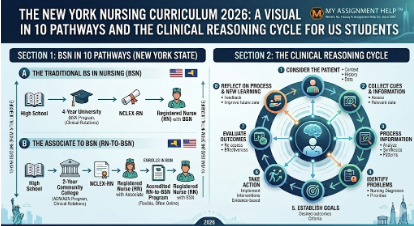
A defining feature of the New York nursing landscape in 2026 is the full maturation of the “BSN in 10” law. This legislation requires all RNs licensed in New York to obtain a Bachelor of Science in Nursing within a decade of their initial licensure. While this has elevated the standard of care across the state, it has also created a surge in “RN-to-BSN” enrollments. These students are often working full-time while navigating advanced modules in community health, leadership, and research.
Cracking the Next-Gen NCLEX (NGN)
The National Council of State Boards of Nursing (NCSBN) has fully integrated the Clinical Judgment Measurement Model (NCJMM) into its licensure exams. Unlike previous versions, the Next-Gen NCLEX focuses on “trend” analysis and decision-making within complex case studies. In New York, where clinical standards are among the highest in the USA, passing this exam is no longer about rote memorization—it is about demonstrating high-level analytical skills.
For those struggling with the specialized technical requirements of these case studies, obtaining expert nursing assignment help is a vital resource. It ensures that academic submissions meet the 2026 TEQSA-level standards and rigorous US university marking rubrics, providing the necessary foundation to excel in both theory and practice.
Data-Driven Insights: New York Nursing Statistics 2026
| Metric | Status: New York (2026) | National US Average |
| BSN Completion Rate | 82% (Driven by State Law) | 68% |
| Nurse Practitioner Growth | +12.4% YoY | +9.1% |
| Clinical Simulation Hours | 45% of Total Curriculum | 32% |
| Average Salary (RN) | $102,500 | $86,000 |
Key Takeaways for US Students
- Compliance: Ensure your educational track aligns with the NY “BSN in 10” timeline to avoid licensure issues.
- Judgment Over Memory: Focus your study habits on the Clinical Judgment Measurement Model (NCJMM) to prepare for the Next-Gen NCLEX.
- Tech Integration: Familiarize yourself with Electronic Health Records (EHR) and predictive analytics, as these are now core curriculum components.
Frequently Asked Questions (FAQ)
Q: How does the “BSN in 10” law affect nurses moving to New York?
A: Nurses licensed in other states who move to NY must meet the BSN requirement within 10 years of their original licensure date, not their NY endorsement date.
See also: Crypto Technology for Secure Online Commerce
Q: Is clinical simulation as effective as bedside hours?
A: The NY State Board allows up to 50% of clinical hours to be completed via high-fidelity simulation, which research shows is highly effective for practicing rare emergency scenarios.
Q: What is the best way to handle nursing research papers?
A: Successful students often use a mix of peer-reviewed databases and professional academic consultants to ensure their work meets the technical standards of US medical writing.
About the Author
Lachlan Miller is a Senior Academic Strategist at MyAssignmentHelp. With over a decade of experience in healthcare education and US content strategy, Lachlan has helped thousands of students navigate the complexities of New York’s rigorous medical curricula. His expertise lies in bridging the gap between clinical rotations and high-level academic research.
References
- Bureau of Labor Statistics (2026). Occupational Employment and Wage Statistics: New York State.
- New York State Education Department (NYSED). Office of the Professions: Nursing Requirements.
- NCSBN (2026). The Evolution of Clinical Judgment in Licensure Exams.